In today's competitive digital landscape, creating content is only half the battle. To achieve higher search engine rankings, drive organic traffic, and improve user engagement, businesses need to regularly evaluate their website content. This is where SEO Content Analysis and Content Audits come into play.
While these terms are often used interchangeably, they serve different purposes in a successful SEO strategy. Understanding the distinction can help marketers, website owners, and content creators make better decisions and maximize their content performance.
In this guide, we'll explain the differences between SEO content analysis and content audits, when to use each approach, and how the right tools can simplify the process.
What Is SEO Content Analysis?
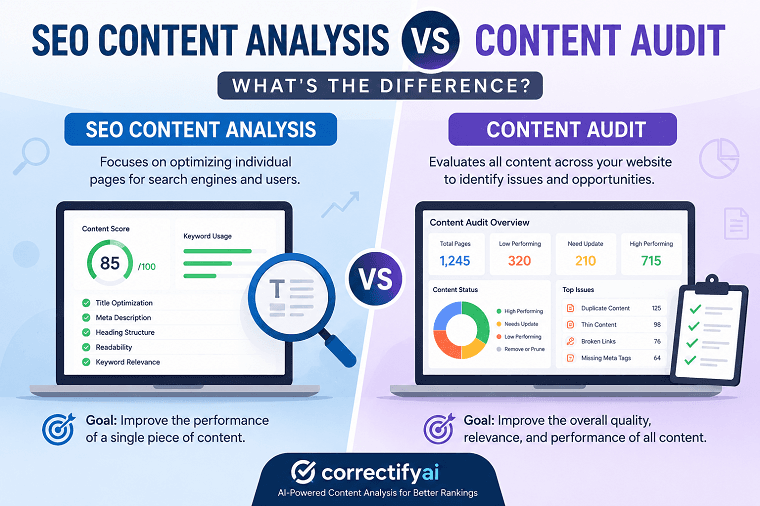
SEO Content Analysis is the process of evaluating individual content pieces to determine how well they are optimized for search engines and users. It focuses on identifying opportunities to improve content quality, keyword relevance, readability, structure, and overall, SEO performance.
The goal is to ensure that a page aligns with search intent and follows current SEO best practices.
A typical SEO Content Analysis tool examines factors such as:
Keyword usage and placement
Content relevance
Heading structure
Meta tags
Internal linking opportunities
Readability score
Content length
User engagement signals
Semantic keyword optimization
By analyzing these elements, businesses can improve existing content and increase the likelihood of ranking higher in search results.
What Is a Content Audit?
A content audit is a broader evaluation of all content across a website. Instead of focusing on a single page, it assesses the overall health and effectiveness of your content library.
The primary objective of a content audit is to identify:
Outdated content
Duplicate content
Low-performing pages
Missing content opportunities
Content gaps
Pages requiring updates or removal
High-performing content that can be expanded
A content audit provides a strategic overview of your website's content assets and helps organizations make informed content marketing decisions.
Large websites with hundreds or thousands of pages often perform content audits periodically to maintain content quality and improve SEO performance.
Key Differences Between SEO Content Analysis and Content Audits
Although both processes aim to improve content effectiveness, they differ significantly in scope and purpose.
Scope
SEO Content Analysis focuses on a specific page or article. It evaluates how well that content performs from an SEO perspective.
A content audit examines an entire website's content ecosystem, identifying trends and opportunities across multiple pages.
Purpose
The purpose of SEO content analysis is optimization.
The purpose of a content audit is strategic content management.
Content analysis helps improve a page before or after publication, while a content audit helps determine what content should be updated, consolidated, expanded, or removed.
Frequency
SEO content analysis is often performed regularly as part of the content creation process.
Content audits are typically conducted quarterly, biannually, or annually depending on the size of the website.
Data Focus
SEO content analysis focuses on page-level metrics such as:
Keyword optimization
Search intent alignment
Readability
On-page SEO elements
Content audits focus on broader metrics such as:
Traffic trends
Conversion performance
Content inventory
Overall content quality
When Should You Use SEO Content Analysis?
SEO content analysis is ideal when:
Creating New Content
Before publishing new articles, analyze content to ensure it meets SEO standards and targets the appropriate keywords.
Updating Existing Pages
If rankings decline or traffic decreases, content analysis helps identify optimization opportunities.
Improving Search Visibility
Using a reliable SEO Content Analysis checker can uncover issues preventing pages from ranking competitively.
Optimizing for Search Intent
Search engines prioritize content that satisfies user intent. Content analysis helps ensure your content delivers relevant and valuable information.
When Should You Conduct a Content Audit?
A content audit becomes necessary when:
Your Website Has Large Amounts of Content
As content accumulates, it becomes difficult to track performance manually.
Organic Traffic Stagnates
A content audit helps uncover underperforming pages that may require updates or consolidation.
You Are Planning a New Content Strategy
Understanding what currently exists prevents duplication and identifies content gaps.
Website Migration or Redesign
Auditing content before major website changes ensures valuable content is preserved and optimized.
How SEO Content Analysis and Content Audits Work Together
Rather than choosing one approach over the other, businesses should use both.
A content audit identifies which pages need attention.
SEO content analysis then provides detailed recommendations for optimizing those pages.
For example:
A content audit identifies 50 outdated blog posts.
SEO content analysis is performed on each post.
Content is updated based on recommendations.
Rankings and traffic improve over time.
This combination creates a data-driven content optimization strategy that supports long-term SEO success.
Benefits of Using an SEO Content Analysis Tool
Manual analysis can be time-consuming and inconsistent. Modern AI-powered solutions make the process faster and more accurate.
A quality SEO Content Analysis tool offers benefits such as:
Faster Optimization
Analyze content within minutes instead of spending hours reviewing pages manually.
Improved Keyword Targeting
Discover keyword opportunities and optimize content around relevant search terms.
Better Readability
Enhance user experience with clear, engaging, and well-structured content.
Competitive Insights
Compare your content with competitors and identify areas for improvement.
Actionable Recommendations
Receive specific suggestions for optimizing headings, keywords, internal links, and overall content quality.
Choosing the Best Content Analysis Tool
Selecting the Best Content Analysis Tool depends on your content goals and SEO requirements.
Look for features such as:
AI-powered content evaluation
Keyword optimization suggestions
Content scoring systems
Search intent analysis
Readability assessments
Competitor benchmarking
Content quality recommendations
The ideal platform should simplify content optimization while providing actionable insights that help improve rankings and user engagement.
Why Businesses Are Turning to AI for Content Analysis
Artificial intelligence has transformed how marketers evaluate content.
AI-powered platforms can process large amounts of data quickly and identify optimization opportunities that may be difficult to detect manually.
Tools like correctifyai help businesses streamline content analysis by providing data-driven recommendations, improving content quality, and supporting more effective SEO strategies.
As search engines continue to evolve, AI-driven analysis will become increasingly important for maintaining competitive visibility.
Conclusion
While SEO Content Analysis and Content Audits are closely related, they serve different roles in a successful content strategy.
SEO Content Analysis focuses on optimizing individual pages for better search performance, while a Content Audit evaluates an entire website's content landscape to identify strategic opportunities.
Businesses that combine both approaches can improve rankings, enhance user experience, and create more effective content strategies.
Whether you're looking for a reliable SEO Content Analysis checker, an advanced SEO Content Analysis tool, or the Best Content Analysis Tool for your business, leveraging AI-powered solutions such as correctifyai can help you make smarter content decisions and achieve long-term SEO success.