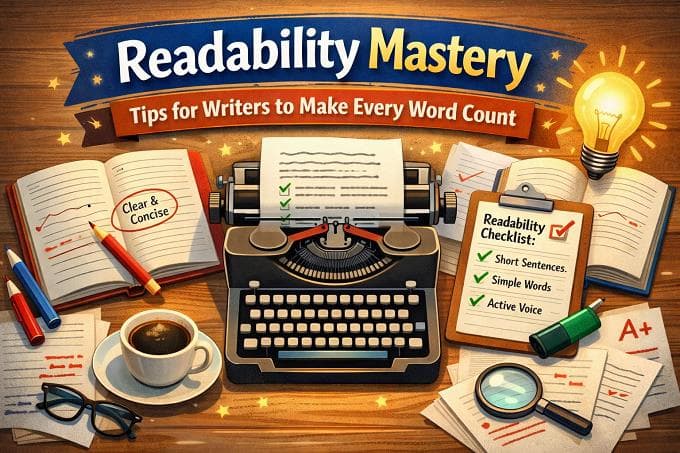
In today's fast-paced digital world, great writing isn't just about creativity - it's about clarity and engagement. Readers skim content, and if your words don't flow effortlessly, they'll bounce away. That's where readability comes in. Mastering readability ensures your message lands with impact, whether you're crafting blog posts, freelance articles, academic papers, or SEO-optimized web copy.
A strong readability score keeps audiences hooked, boosts time on page, and improves search rankings. Tools like a readability checker make it simple to measure and refine your text. In this guide, we'll explore practical tips to elevate your writing's readability, helping every word truly count.
Why Readability Matters for Writers in 2026
Readability measures how easily readers understand your text. Popular formulas like Flesch Reading Ease and Flesch-Kincaid Grade Level evaluate factors such as sentence length, word complexity, and syllable count. A Flesch Reading Ease score of 60–70 (roughly 8th-grade level) is ideal for general audiences, making content accessible without dumbing it down.
Poor readability leads to higher bounce rates, lower engagement, and lost opportunities. For students submitting essays, freelancers pitching clients, writers building audiences, or SEO agencies delivering content, high readability drives better results. Search engines favor clear, user-friendly text, and readers stay longer when content feels effortless.
Using a readability checker online helps identify issues instantly, allowing quick fixes that enhance flow and retention.
Core Principles of Readable Writing
Start with these foundational rules to build readability from the ground up.
1. Keep Sentences Short and Varied
Long sentences tire readers. Aim for an average of 15–20 words per sentence. Break complex ideas into shorter ones for better pacing.
Example: Instead of: "The protagonist, who had been struggling with internal conflict for many years due to his traumatic past experiences, finally decided to confront his fears head-on in a dramatic scene."
Try: "The protagonist had struggled with internal conflict for years. His traumatic past haunted him. Finally, he confronted his fears in a dramatic scene."
Short sentences create rhythm. Vary lengths to avoid monotony - mix punchy statements with slightly longer ones for natural flow.
2. Choose Simple, Precise Words
Favor short, everyday words over complex ones. Replace "utilize" with "use," "facilitate" with "help," or "commence" with "start." Fewer syllables per word boost your score.
Avoid unnecessary jargon unless your audience expects it. When specialized terms are needed, define them clearly. Active voice strengthens clarity: "The team completed the project" beats "The project was completed by the team."
3. Structure for Skimmability
Most readers scan before reading fully. Use:
Subheadings to break sections
Bullet points and numbered lists for key ideas
Bold or italics for emphasis
Short paragraphs (3–5 lines max)
White space invites reading. Tools like a readability checker often flag dense blocks - reformatting fixes this fast.
4. Eliminate Unnecessary Words and Adverbs
Cut fluff. "Very unique" becomes "unique." "In order to" shrinks to "to." Strong verbs reduce adverb reliance: "She ran quickly" → "She sprinted."
Passive constructions and nominalizations (turning verbs into nouns) hurt flow. Change "The decision was made by management" to "Management decided."
5. Improve Flow with Transitions and Logical Structure
Guide readers smoothly. Use transitions like "however," "additionally," "for example," or "meanwhile." Organize ideas logically - problem → solution, chronological order, or importance.
Read aloud to catch awkward phrasing. If it sounds clunky, rewrite.
Advanced Tips to Maximize Readability
Once basics are solid, refine further.
Target Audience Reading Level: For broad appeal, aim for grade 7–9. Academic or technical writing can go higher, but clarity remains key.
Incorporate Visual Breaks: Add relevant images, pull quotes, or tables. Visuals rest eyes and reinforce points.
Test and Iterate: Write a draft, then run it through a readability checker online. Adjust based on feedback—shorten sentences or simplify words until scores improve.
Balance Creativity and Clarity: Don't sacrifice voice for scores. Readable writing enhances style, letting personality shine without confusion.
Leverage Tools Like CorrectifyAI for Readability Mastery
Modern writers benefit from AI-powered helpers. CorrectifyAI stands out with its integrated readability checker, grammar tools, and AI humanization features. Paste your draft to get instant scores, suggestions for clearer phrasing, and tips to boost flow.
CorrectifyAI also detects AI-generated text, checks plagiarism, verifies facts, and refines tone—perfect for writers ensuring authenticity. Use it to polish drafts quickly, turning good writing into exceptional, reader-friendly content.
Final Thoughts
Readability isn't about dumbing down or simplifying complex ideas - it's about delivering them with maximum clarity, impact, and engagement. By consistently applying these proven tips - shortening sentences, choosing precise and simple words, structuring content for easy scanning, ruthlessly cutting fluff, and ensuring seamless logical flow - you can transform any piece of writing into something truly reader-friendly. Make it a habit to regularly test your drafts using a reliable readability checker online to monitor improvements and fine-tune your style over time.
Ultimately, mastering readability does far more than polish text: it turns casual readers into loyal, returning fans, helps freelancers consistently win repeat clients and glowing testimonials, empowers students to express ideas clearly and earn higher marks, and gives SEO agencies a powerful competitive edge in achieving stronger rankings and better user experience signals. Don't wait - start applying these strategies in your very next draft today. Your words will become more powerful, your readers will stay longer, and everyone involved will thank you for the effortless reading experience you create.
FAQ
1. What is readability and why does it matter for writers?
Readability measures how easily readers understand your text. High readability keeps readers engaged, reduces bounce rates, improves SEO rankings, and helps your message land effectively.
2. What is a good readability score?
Aim for a Flesch Reading Ease score of 60–70 (about 8th–9th grade level) for general audiences. This makes content clear and accessible without losing depth.
3. How can I quickly check my content’s readability?
Use a readability checker or readability checker online like the one built into CorrectifyAI. Paste your text to get an instant score and improvement suggestions.
4. Do short sentences always improve readability?
Yes, shorter sentences (15–20 words on average) make text easier to read. Vary lengths slightly to keep the rhythm natural and avoid monotony.
5. Can I keep my writing style while improving readability?
Absolutely. Focus on clarity—use simple words, cut fluff, and structure for skimming—without sacrificing your unique voice. Tools like CorrectifyAI help balance style and readability.