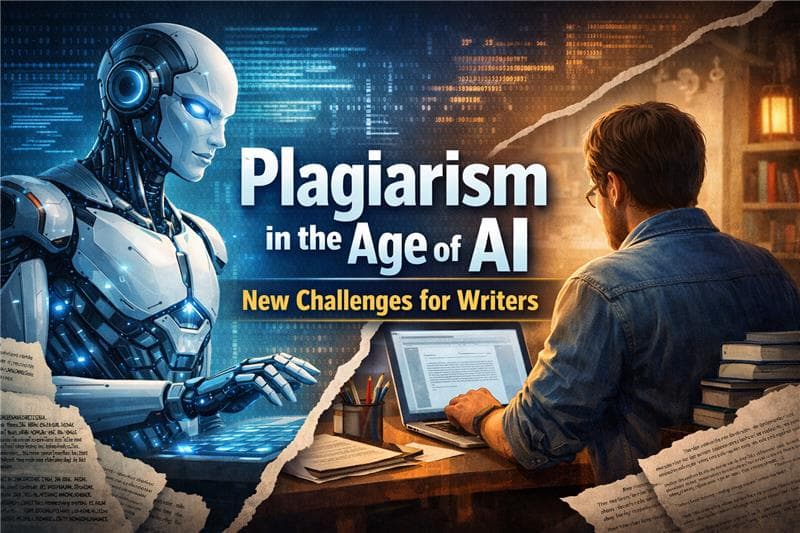
In today’s digital era, plagiarism—once understood simply as copying someone else’s words - is evolving into a far more intricate challenge. With the rapid rise of artificial intelligence (AI) tools like ChatGPT, Bard, and others, writers face nuanced threats to originality, integrity, and credibility. In this comprehensive blog, we’ll explore how AI is reshaping plagiarism, why it matters more than ever, and what writers can do to uphold ethical standards in their work.
What Is Plagiarism in the Age of AI?
Traditional Plagiarism vs AI-Assisted Plagiarism
Traditionally, plagiarism meant direct copying of text without proper attribution. However, with AI tools that can generate entire passages of content, AI assisted plagiarism is emerging as a new frontier - where text may not be directly copied but still lacks genuine originality because it stems from training data rather than genuine human insight.
Thus, plagiarism today includes:
Copy-paste duplication
AI-generated content presented as original human work
Paraphrased material that still appropriates ideas without credit
The AI Factor: Changing the Landscape of Plagiarism
The integration of AI into writing workflows has brought both opportunities and challenges. On one hand, writers can produce drafts faster, brainstorm ideas more efficiently, and refine wording with ease. On the other hand, misuse of AI tools can blur the line between inspiration and plagiarism.
For instance:
A recent study found that AI-generated academic essays had a 42% plagiarism-flag rate in 2024, up from 27% in 2023 (based on content scanned for similarity). SEOSandwich
Additionally, 61% of universities reported increased cases of AI-assisted plagiarism in student submissions. SEOSandwich
This dramatic rise highlights how prevalent AI has become in writing contexts, especially academic and professional settings. Moreover, student discipline cases related to AI plagiarism rose from 48% to 64% between 2022–23 and 2024–24, showing how educational institutions increasingly struggle to maintain integrity.
Why AI Makes Plagiarism Harder to Detect
1. AI Produces “Synthetic Originality”
Unlike copy-paste plagiarism, AI tools can generate text that is not directly copied but is derivative, synthesizing ideas from patterns in data they were trained on. These texts can appear “original” yet still reflect ideas that aren’t wholly unique.
According to content research, AI paraphrasing tools can generate content with 27–48% semantic overlap with source material—even when the wording differs. SEOSandwich
2. Context and Nuance Are Lost
AI algorithms lack deep contextual comprehension. As a result:
They may produce text that inadvertently mirrors existing content
They can fail to maintain proper citation norms
They might misuse terminology in nuanced ways
This makes it difficult for traditional detection tools and even human reviewers to determine whether plagiarism has actually occurred.
3. Detection Tools Still Evolve
While advanced plagiarism checkers now incorporate AI-aware mechanisms, many tools still have accuracy limitations. For example:
Standard plagiarism tools may go undetected nearly 41% of the time for AI-generated text without additional analysis. SEOSandwich
Some AI detectors struggle with paraphrased AI text, lowering detection accuracy significantly. Reddit
These detection gaps make it clear: technology alone cannot guarantee academic or professional integrity.
The Ethical Dilemma for Writers
Where Does Responsibility Lie?
Writers today must ask themselves:
Is using AI to generate content ethical if not disclosed?
Does rewriting AI content still count as original work?
How do we credit sources if an AI tool conceptualized them?
These questions reflect real ethical complexity. For example, many AI tools lack transparent source references for generated text, meaning writers may unknowingly reproduce ideas that originated elsewhere. This raises serious concerns, especially in academic research, journalism, and professional writing.
AI in Professional Contexts: Beyond Academia
AI plagiarism isn’t just an academic concern—it's a business and SEO issue too.
Some notable industry insights include:
74% of SEO professionals reported ranking penalties tied to AI-generated duplicate content.
32% of businesses detected duplicated AI-produced marketing copy across vendors.
These stats illustrate how AI plagiarism affects digital marketing, corporate communications, and brand reputation. Duplicate content can reduce search engine visibility, weaken brand credibility, and even trigger legal challenges.
Best Practices to Combat AI-Driven Plagiarism
1. Cite Every Source Transparently
Whether you use direct quotes, paraphrase AI suggestions, or adapt third-party data, proper attribution is essential. This includes:
Naming sources clearly
Using recognized citation styles (APA, MLA, Chicago, etc.)
Acknowledging when AI contributed to drafting
2. Emphasize Human Insight and Original Analysis
AI tools should assist, not replace, genuine thinking. Always add your:
Personal perspective
Critical evaluation
Unique examples or experiences
3. Use Plagiarism Tools Strategically
Instead of relying on one tool, combine multiple checkers for both plagiarism and AI content:
Human editing complements automated checks
Multiple perspectives reduce the risk of undetected overlap
4. Educate Yourself and Your Team
Understanding how AI works and its limitations is crucial. Stay informed about:
AI policy updates
Plagiarism detection techniques
Ethical writing standards
A Balanced Outlook on AI and Writing
Despite challenges, AI is not inherently a threat to writing integrity. When used ethically, it can:
Accelerate research
Improve grammar and structure
Generate fresh ideas for creative work
As writing expert John Doe once said, “AI should be a co-pilot, not the pilot of your writing.” This quote highlights the importance of human discretion in generating meaningful content.
Conclusion: Upholding Integrity in the AI Era
In conclusion, the age of AI has undeniably transformed how plagiarism is defined, detected, and prevented. Writers of all kinds—students, professionals, and content creators—must navigate a new landscape where:
Plagiarism is more subtle
Detection tools are still evolving
Ethical writing matters more than ever
Ultimately, authenticity remains paramount. By understanding AI’s limitations, embracing ethical standards, and committing to original thought, writers can thrive in this new era without compromising integrity.
To protect your writing—or check for plagiarism effectively—you can explore AI-enhanced tools like the one at https://correctifyai.com/plagiarism-checker.
Frequently Asked Questions
1. Can AI writing tools cause plagiarism?
Yes, AI writing tools can cause unintentional plagiarism. When millions of writers use the same AI tools with similar prompts, they often generate suspiciously similar content. The AI synthesizes information from its training data, which can result in output that closely matches existing content across the web, even though it's not copying verbatim.
2. How accurate is CorrectifyAI's plagiarism checker?
CorrectifyAI's plagiarism checker offers 99% accuracy in detecting content similarities. Unlike traditional plagiarism checkers, it's specifically designed to identify AI-generated content patterns and scans billions of sources, including web pages, academic papers, and AI-generated content databases, giving you comprehensive originality verification.
3. What's an acceptable plagiarism percentage for content?
Most clients and publishers expect content to have at least 95-98% originality, meaning 2-5% similarity is generally acceptable. However, this depends on your niche and client requirements. Technical writing or research-based content may naturally have higher similarity scores due to industry terminology. Always aim for the highest originality possible to protect your reputation.
4. How does CorrectifyAI's coin-based pricing work?
CorrectifyAI uses a simple coin system where 1 word equals 1 coin. For example, checking a 1,000-word article costs 1,000 coins. There are no confusing subscription tiers or hidden fees—you only pay for what you use. This transparent, pay-as-you-go model is perfect for freelancers with variable workloads who need flexibility.
5. Does CorrectifyAI store my content after checking?
No, CorrectifyAI follows a strict privacy-first approach and does not store your content after plagiarism checks are complete. This means you can safely scan confidential client work, drafts under NDA, or sensitive materials without worrying about data breaches or your content being added to plagiarism databases.
6. Can I use CorrectifyAI to check AI-humanized content?
Absolutely! In fact, this is a recommended workflow. If you're using AI writing tools, first run your content through CorrectifyAI's AI Humanizer to create more natural phrasing, then verify originality with the plagiarism checker. This two-step process ensures your content is both undetectable as AI-written and completely original.