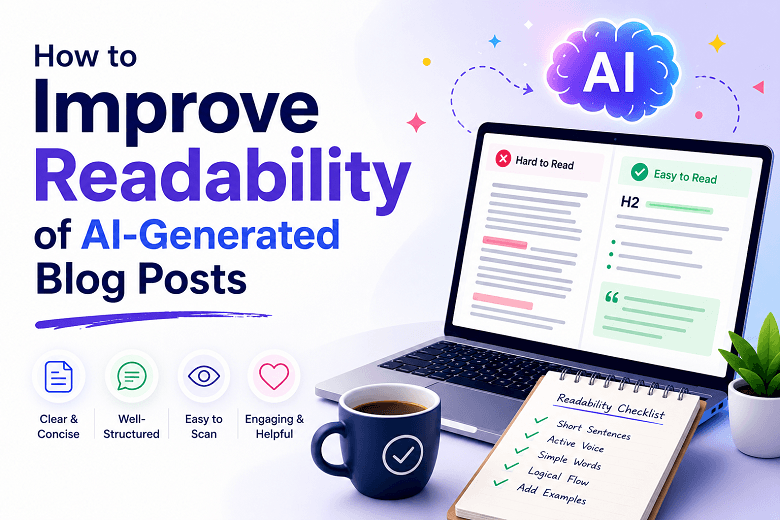
Artificial intelligence has changed the way businesses create content. From blog writing and product descriptions to email campaigns and SEO pages, AI tools help save time and increase productivity. However, one common issue many website owners and marketers face is poor readability in AI-generated content.
Even though AI can generate large amounts of text quickly, the output often sounds robotic, repetitive, or difficult to read. Readers today expect content that is natural, engaging, and easy to understand. If your blog posts lack readability, visitors may leave your website quickly, reducing engagement and search engine rankings.
Improving readability is essential for creating high-quality content that both users and search engines appreciate. In this guide, we will explain practical ways to improve the readability of AI-generated blog posts while maintaining SEO performance and content quality.
Why Readability Matters for AI Content
Readable content helps users consume information faster and more comfortably. Search engines like Google also prioritize content that provides positive user experience. If your AI-generated blog is difficult to understand, it may lead to:
Higher bounce rates
Lower average session duration
Reduced user trust
Poor search engine rankings
Lower conversion rates
Readable blog posts improve engagement and help readers stay connected with your content from beginning to end.
Common Problems in AI-Generated Blog Posts
Before improving readability, it is important to understand the common issues found in AI-written content.
1. Repetitive Sentences
AI tools often repeat similar phrases or sentence structures multiple times within the same article. This makes the content feel unnatural and boring.
2. Long Paragraphs
Large blocks of text reduce readability and make it difficult for users to scan information quickly.
3. Robotic Tone
AI-generated content sometimes lacks emotion, personality, and conversational flow.
4. Complex Vocabulary
Using unnecessary technical words or complicated language can confuse readers.
5. Lack of Logical Flow
Some AI articles jump between topics without smooth transitions, affecting overall readability.
Steps to Improve AI Generated Blog Readability
AI-generated content can save time, but it often needs refinement to make it engaging and easy to read. By improving sentence structure, simplifying language, organizing content effectively, and adding a human touch, you can enhance readability and create a better experience for your audience. Follow these practical steps to transform AI-generated drafts into clear, reader-friendly blog posts.
1. Humanize the AI-Generated Text
One of the most effective ways to improve readability is to Humanize the AI-Generated Text. AI-generated content often sounds robotic, repetitive, or overly formal. Before publishing, review the content and rewrite sections to match your brand voice. Adding personal insights, real-world examples, opinions, and relatable experiences can make the content feel more natural, authentic, and engaging for readers.
Example:
Instead of: "Businesses can leverage AI tools for content creation."
Write: "Many marketers use AI tools to speed up content creation, but human editing is still essential for quality."
2. Use Simple and Clear Language
Complex vocabulary can make content difficult to understand. Replace jargon, technical terms, and lengthy phrases with words your audience uses every day.
Best Practices:
Use "help" instead of "assist"
Use "start" instead of "commence"
Explain technical terms when necessary
Clear language improves both user experience and content accessibility.
3. Keep Sentences and Paragraphs Short
AI tools frequently generate long sentences packed with multiple ideas. Break these into shorter, easier-to-read sentences.
Recommended Guidelines:
Keep sentences under 20 words whenever possible
Limit paragraphs to 2–4 sentences
Focus on one idea per paragraph
Shorter content blocks improve readability, especially on mobile devices.
4. Write in Active Voice
Active voice makes content more direct, engaging, and easier to understand than passive voice.
Passive Voice:
"The report was generated by the AI tool."
Active Voice:
"The AI tool generated the report."
Using active voice helps readers process information faster and creates a more conversational tone.
5. Improve Content Structure with Headings
A well-structured blog is easier to scan and navigate. Break your content into logical sections using descriptive headings and subheadings.
Structure Tips:
Use H2s for major topics
Use H3s for supporting points
Keep headings concise and descriptive
Organize information in a logical sequence
Good structure helps both readers and search engines understand your content.
6. Add Transition Words for Better Flow
Transition words connect ideas and create a smoother reading experience. Without them, AI-generated content can feel disconnected.
Useful Transition Words:
Additionally
However
Therefore
Meanwhile
For example
As a result
These words guide readers through your content and improve overall coherence.
7. Use Lists, Bullet Points, and Readability Tools
Readers often skim blog posts rather than reading every word. Bullet points, numbered lists, tables, and highlighted takeaways make content easier to consume.
Additionally, use readability tools to identify:
Long sentences
Passive voice usage
Dense paragraphs
Poor heading structure
Aim for a readability score that is accessible to a broad audience. Regular readability checks can significantly improve engagement and retention.
Tips to Improve Readability of AI-Generated Blog Posts
Use Short and Clear Sentences
One of the easiest ways to improve readability is by keeping sentences short and direct. Readers prefer simple explanations over long and complicated wording.
Instead of writing:
“Businesses utilizing artificial intelligence-generated content frequently encounter challenges associated with user engagement metrics.”
Write:
“Businesses using AI content often struggle with user engagement.”
Simple writing improves understanding and keeps readers interested.
Break Content Into Smaller Paragraphs
Online readers usually scan content before reading it fully. Short paragraphs make blog posts easier to consume on desktops and mobile devices.
Try to keep paragraphs between 2–4 lines whenever possible. Use spacing strategically to avoid overwhelming the reader.
Add Proper Headings and Subheadings
Well-structured content improves both user experience and SEO. Headings help readers quickly locate the information they need.
Use:
H2 headings for main sections
H3 headings for supporting topics
Bullet points for lists
Numbered lists for step-by-step instructions
This structure improves content organization and readability.
Remove Repetitive AI Phrases
AI writing tools frequently repeat words like:
Additionally
Furthermore
In conclusion
It is important to note
Overusing these phrases makes content sound automated. Edit repetitive transitions and replace them with natural alternatives.
Midway through your editing process, tools like correctifyai can help identify repetitive patterns, awkward phrasing, and readability issues in AI-generated text. This helps create more natural and engaging blog content for your audience.
Write in a Conversational Tone
Readers connect better with content that sounds human. Instead of overly formal language, use a friendly and conversational tone.
For example:
Use “you” and “your”
Ask questions occasionally
Explain ideas naturally
Avoid excessive jargon
Conversational writing creates stronger engagement and improves readability scores.
Use Active Voice Instead of Passive Voice
Active voice makes sentences more direct and easier to understand.
Passive voice:
“The article was generated by the AI tool.”
Active voice:
“The AI tool generated the article.”
Active voice improves sentence clarity and keeps content dynamic.
Optimize Content for Mobile Readers
A large percentage of blog traffic now comes from mobile devices. Readability should be optimized for smaller screens by:
Using short paragraphs
Adding white space
Avoiding oversized text blocks
Using simple formatting
Mobile-friendly readability improves user experience and supports SEO performance.
Include Real Examples and Practical Insights
AI-generated blogs often feel generic because they lack real-world context. Adding examples, scenarios, or practical tips makes the content more valuable.
For example, instead of saying:
“Readable content improves engagement.”
Explain:
“Readable blog posts encourage users to spend more time on your website, which can increase conversions and lower bounce rates.”
Specific details improve both readability and credibility.
Improve SEO Without Overstuffing Keywords
Keyword optimization is important, but stuffing keywords into every sentence hurts readability.
Use keywords naturally throughout the article, including:
AI-generated content
blog readability
content optimization
SEO-friendly content
AI writing tools
humanized AI content
Search engines now prioritize useful and user-focused content over excessive keyword usage.
Edit and Proofread Every AI Draft
AI-generated content should never be published without human review. Editing is essential for improving:
Grammar
Sentence flow
Accuracy
Readability
Tone consistency
Even the best AI writing tools require manual refinement to achieve professional-quality content.
Final Thoughts
AI-generated content can save time and improve productivity, but readability remains one of the most important factors for success. Readers prefer content that is clear, engaging, and easy to understand. By using shorter sentences, improving structure, removing repetition, and maintaining a conversational tone, businesses can create high-quality blog posts that perform better online.
Combining AI efficiency with proper editing strategies helps produce SEO-friendly and reader-focused content. Platforms like correctifyai can support this process by helping writers improve readability, detect repetitive patterns, and refine AI-generated text for a more natural human experience.
FAQs
1. Why is AI-generated content hard to read?
AI-generated content can sound repetitive, robotic, or overly complex, which reduces readability and user engagement.
2. How can I make AI-written blog posts more human?
Use shorter sentences, conversational language, proper formatting, and manual editing to create more natural content.
3. Does readability affect SEO rankings?
Yes. Readable content improves user experience, increases engagement, and helps search engines better understand your content.
4. What is the best way to improve AI content quality?
Edit AI drafts carefully, remove repetitive phrases, improve structure, and fact-check information before publishing.
5. Can AI readability tools improve blog performance?
Yes. AI readability tools help optimize sentence clarity, grammar, structure, and overall content quality for better engagement and SEO.